

Brands doing this are quietly growing faster than you
5 tactics the smarter brands are already running.

📆 Wednesday, 25 Mar 2026
Hey — It’s Rhythm. Thrilled to have you back in Ecom Circle, where I spend my time scaling ecom brands & finding best growth strategies to share with you.
Popups are something every ecommerce brand uses. They’re the primary way to build an email list, and on the surface, they seem to be doing their job. But the way brands use popups comes with a few hidden costs — small inefficiencies that quietly add up over time.
For example, the most common approach is simple: offer a discount in exchange for an email. A straight-up bribe, really.
And there’s a reason it’s so common - it works. But, you end up filling your list with discount hunters who don’t buy without an incentive. So not only do you lose margin on the discount you offered, you’ve set yourself up with people who will only buy when you offer discounts - further eating into your margins.
On top of that, you’re often giving away margin to high-intent customers who would have converted anyway.
Even if you accept the cost of the discount, most brands don’t make the trade worthwhile. The interaction is purely transactional — email in, discount out — with no attempt to capture anything more useful. Simple inputs like product preferences, category interest, or purchase intent could go a long way in improving segmentation later, but they’re rarely taken.
And then there’s the experience itself.
Many times, popups just interrupt a customer when they’re genuinely checking out your stuff. Personally, this is my biggest problem with popups - I’ve often been disturbed by an untimely popup while I’m actively engaged with some product. Not only do I immediately close the popup to get back to my browsing (rendering the popup useless), it also makes me mildly annoyed
None of this means popups don’t work. It just means they’re usually not being used as well as they could be.
Here are 5 ways ecommerce brands use popups in more creative and efficient ways.
1. Point customers to sales, events and services you already offer
If you’re already running a sale, offering free shipping, or hosting an event — promote that instead of layering another discount on top.
The customer still gets value, but you’re not giving away additional margin unnecessarily. It’s a simple shift, but one that aligns your popup with offers that already exist in your business.
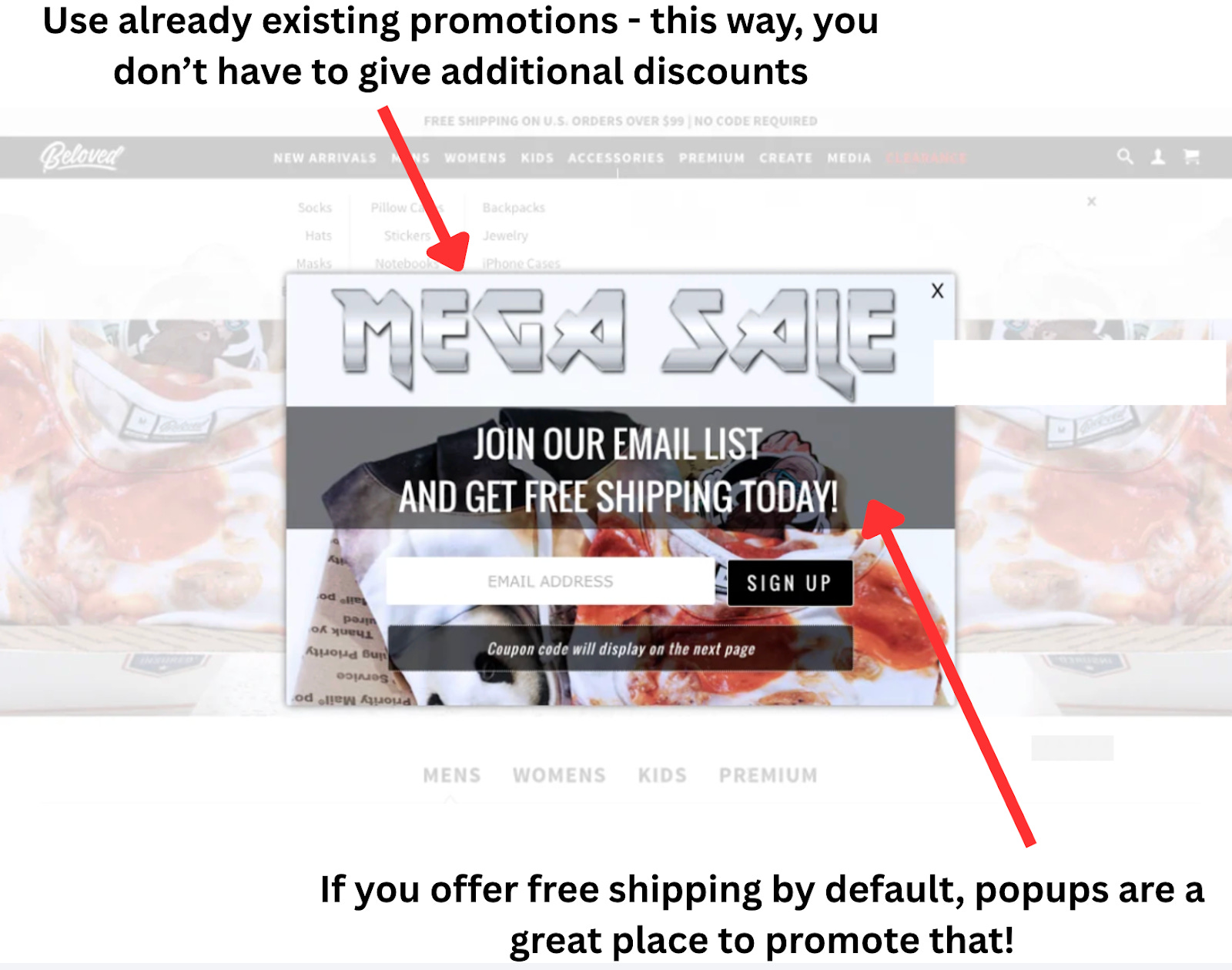
You can also highlight events, launches, or giveaways. Same principle — make better use of what’s already in motion.
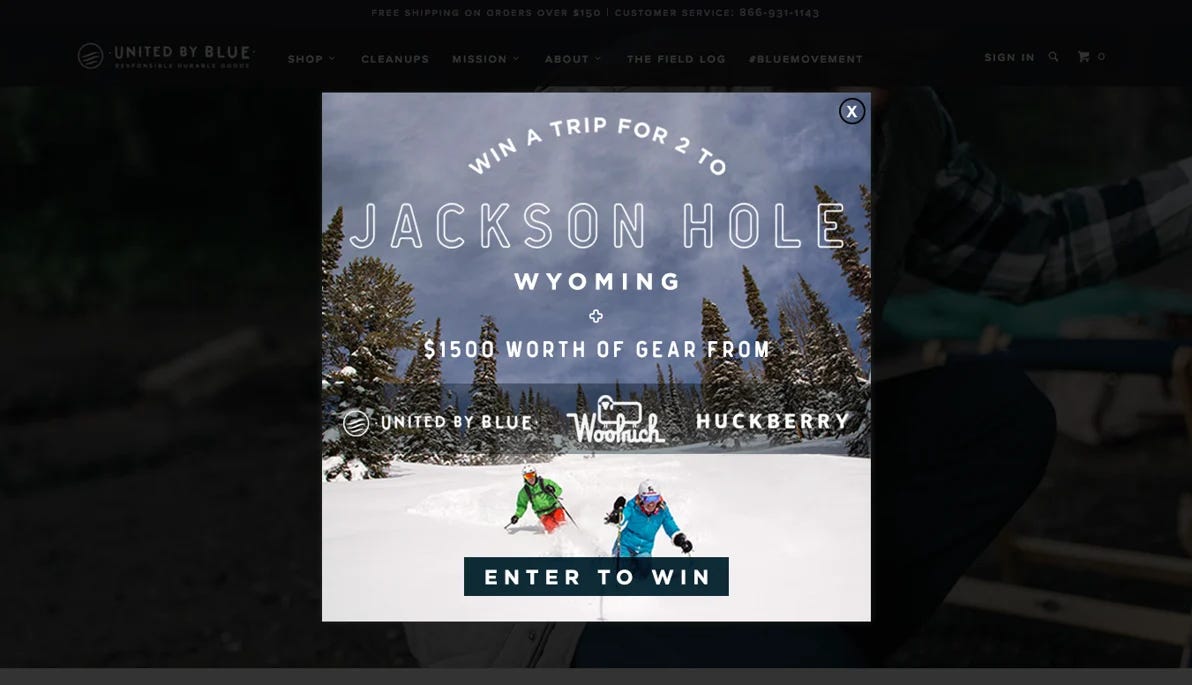
2. Incentivize customers to buy more
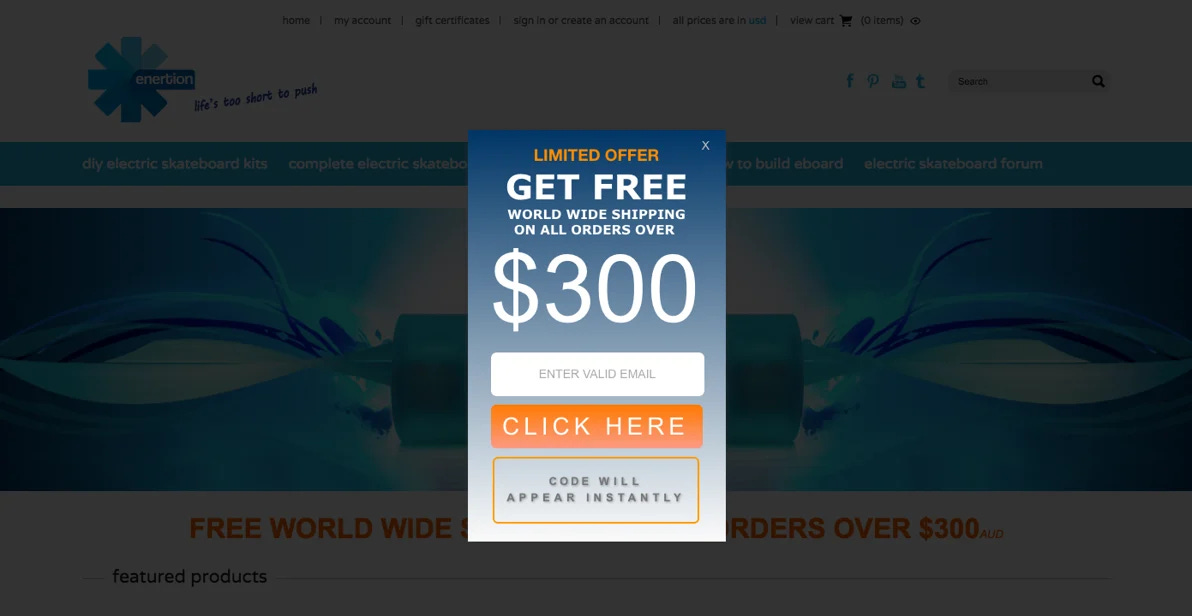
If you’re going to offer a discount, make it work harder for you.
Instead of a flat “10% off,” tie the offer to a higher cart value — for example, free shipping or a discount if the customer spends ~15% more than your average order value. This not only protects margin but is also an effective strategy to push AOV higher.
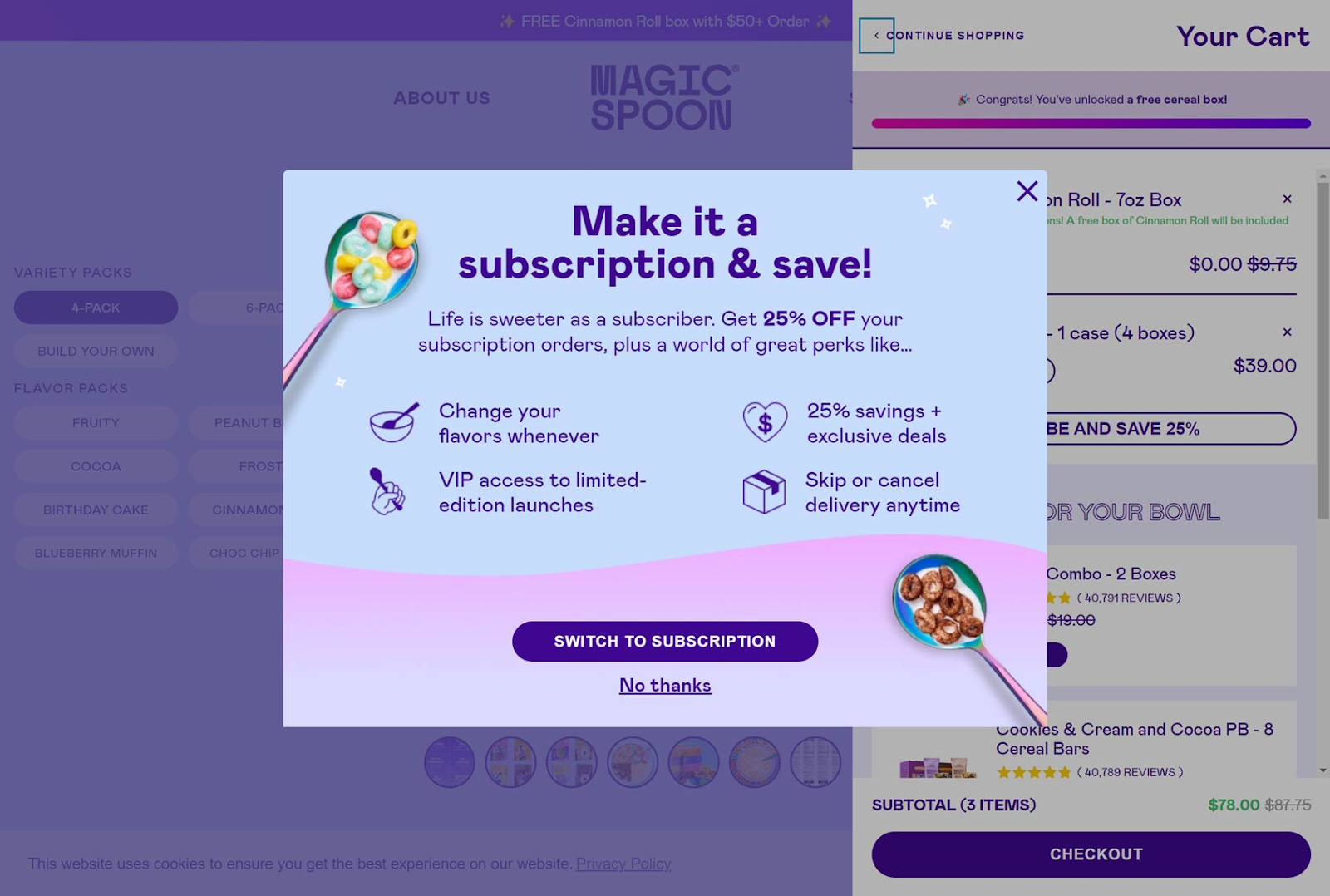
Some brands take this even further. Magic Spoon, for example, uses restock moments to push subscriptions instead — offering a better deal in exchange for recurring revenue. The customer saves, and the brand gains predictability.
3. Reduce cart abandonment with well-timed popups
Popups don’t have to be limited to list-building.
Well-timed popups on cart or checkout pages can be highly effective in reducing abandonment. Exit-intent popups at this stage can address last-minute hesitation and nudge customers toward completion.
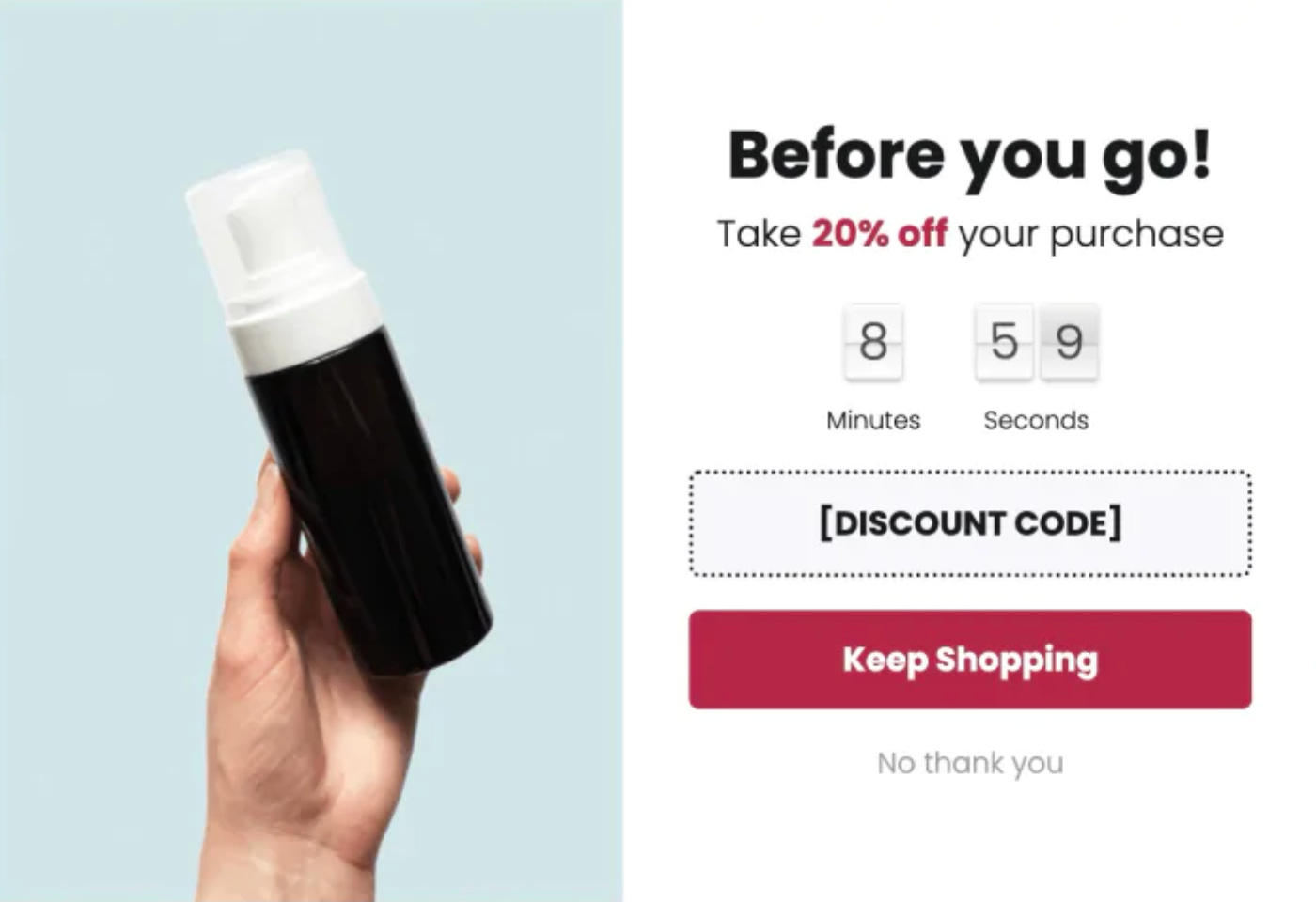
Even better, they can be used to solve specific problems — highlighting alternative payment methods, reinforcing shipping timelines, or offering reassurance when it matters most.
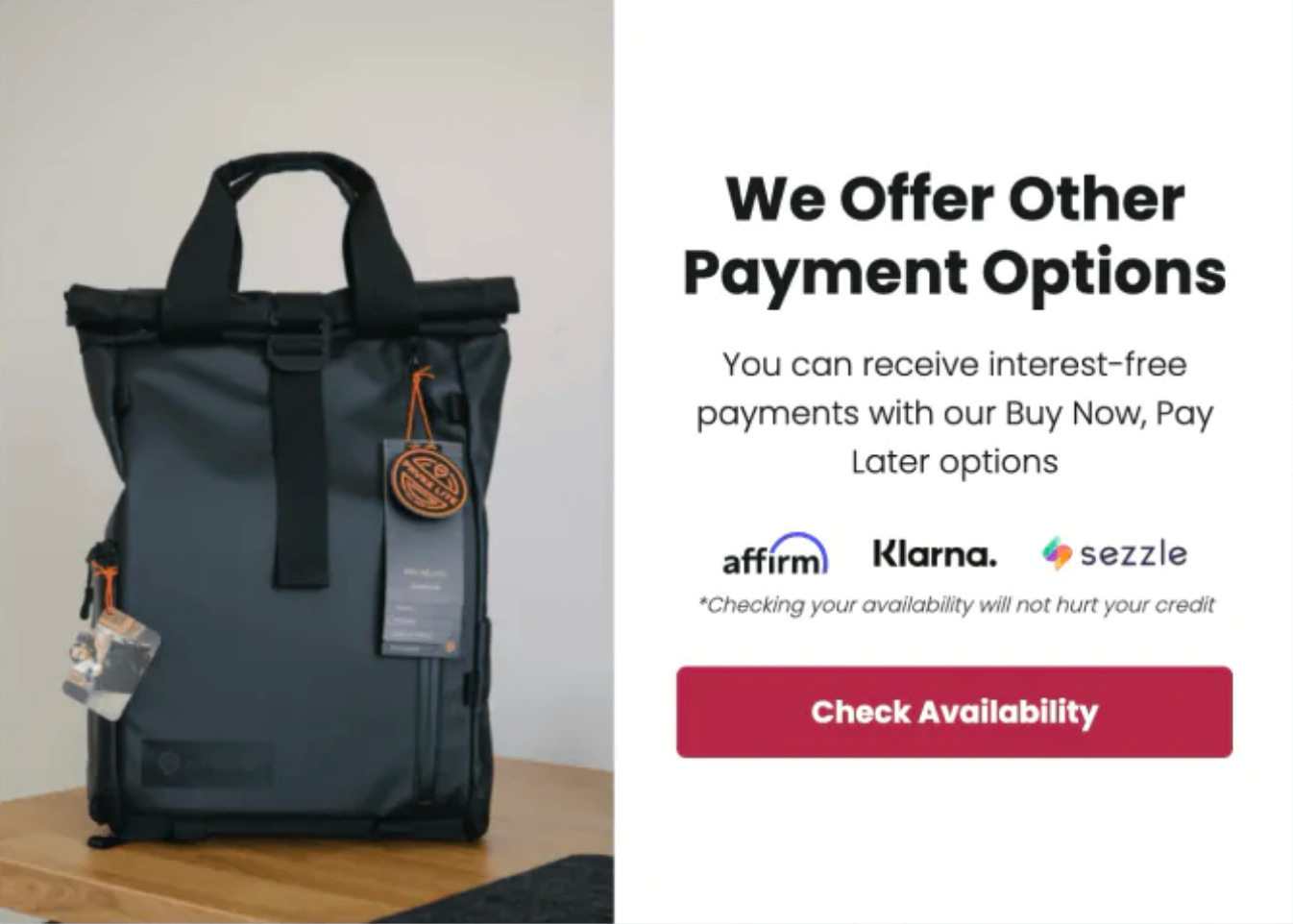
Every day you don’t have this in place, you’re watching ready-to-buy customers walk out the door.
Cart abandonment isn’t a traffic problem or an ads problem — it’s a conversion problem. And unlike most fixes, this one doesn’t require more spend. Just a smarter setup.
Want to know exactly how much revenue your checkout is leaking right now?
👉 Book a free audit call — we’ll pinpoint the drop-off, show you what’s fixable, and give you a popup sequence built specifically around your checkout flow.
4. Give customers the choice to pick their discounts
Not every customer values the same incentive.
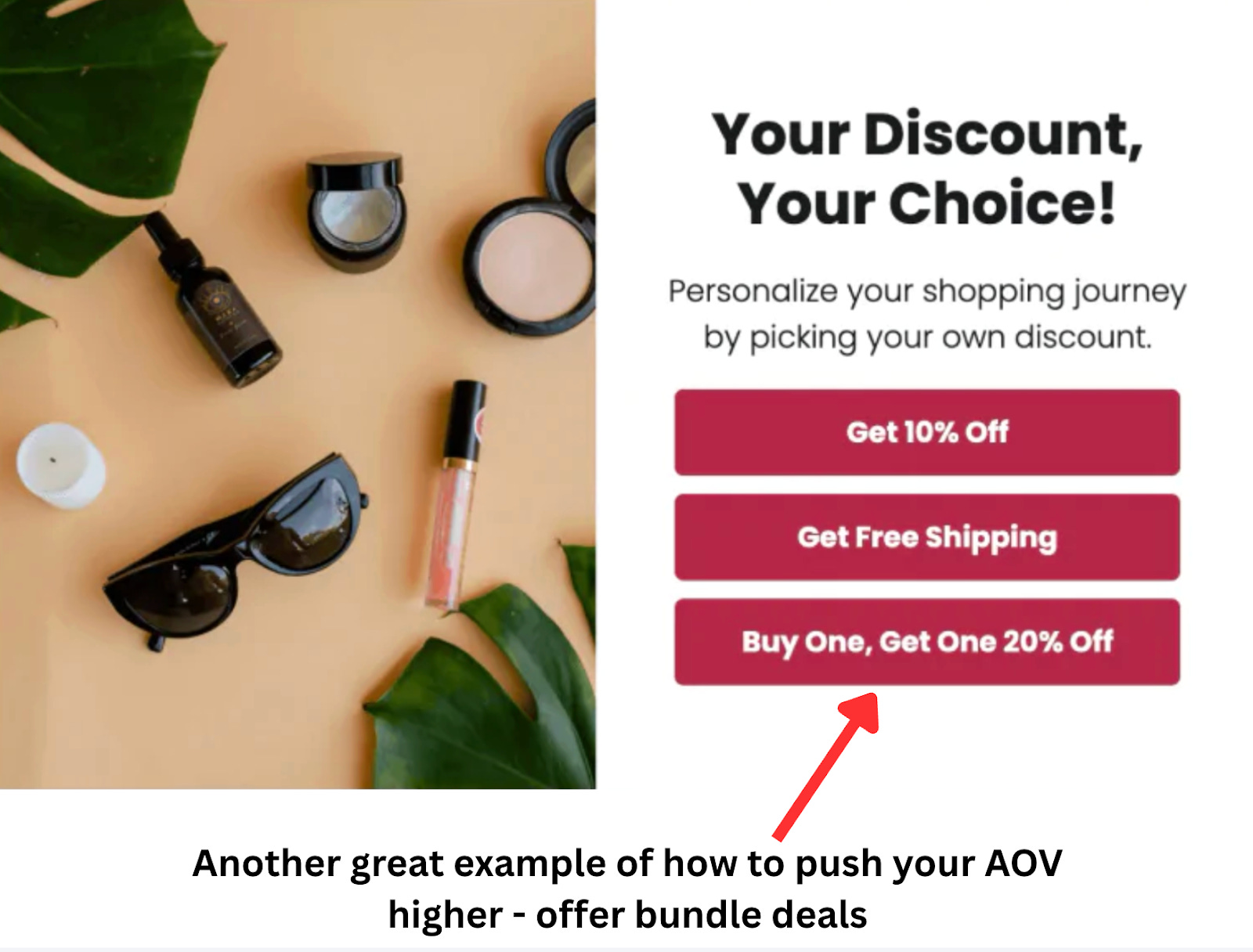
Instead of offering a single discount, give customers a choice — free shipping, a percentage discount, or a bundle offer. This makes the experience more interactive and gives customers a sense of control.
At the same time, it gives you flexibility. You can subtly guide users toward higher-value options or upsell paths without forcing a one-size-fits-all offer.
5. Gather info about your customers
This is another good way to make the most out of sign-up discounts.
Use popups to collect zero-party data — what the customer is shopping for, their preferences, or what brought them to your site. This information can be used to personalize not just your email flows, but your entire marketing strategy..
Some brands take it a step further by using this input to immediately guide users to relevant products or categories, turning the popup into a useful part of the journey rather than a distraction.
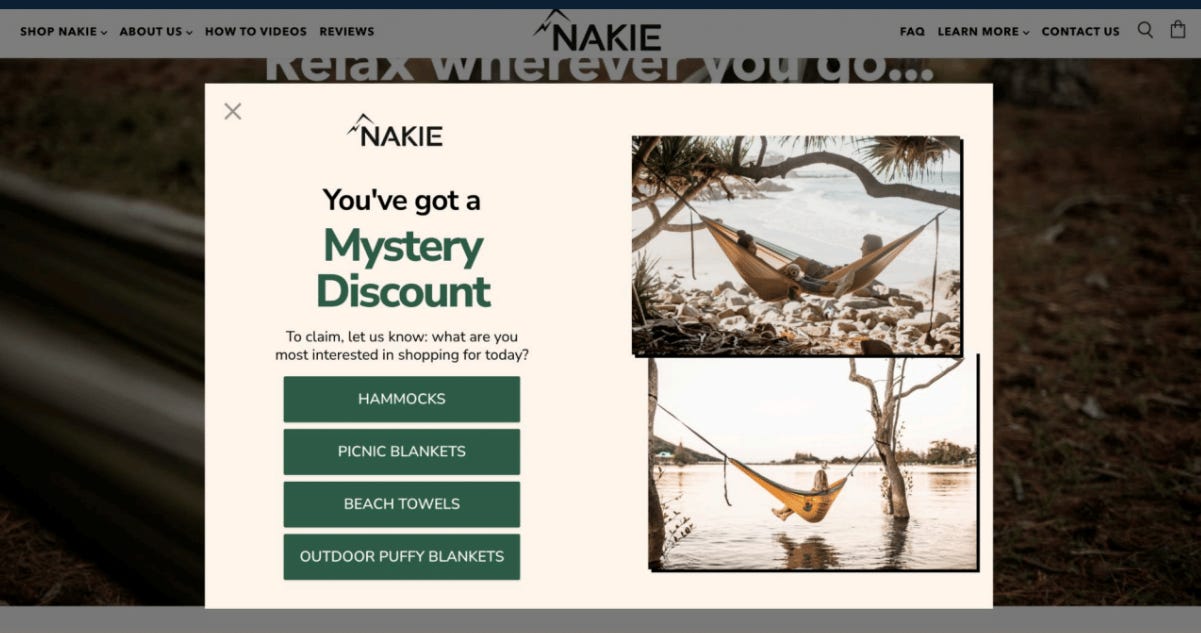
Some brands take it a step further by using this input to immediately guide users to relevant products or categories, turning the popup into a useful part of the journey rather than a distraction.
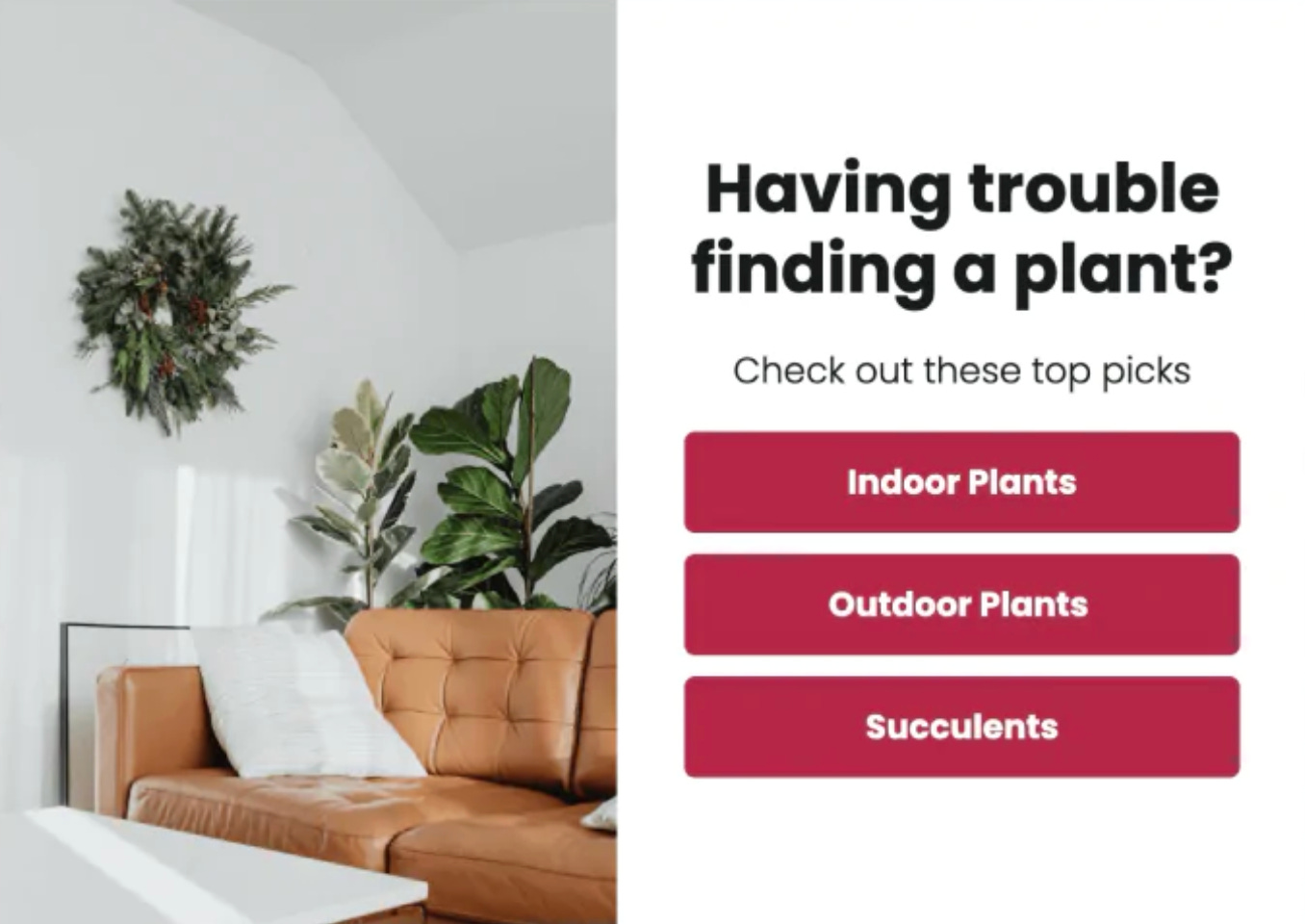
Popups are one of the earliest touchpoints in your customer journey. Used poorly, they’re just a list-building tool — one that quietly chips away at your margins, your experience, and your long-term retention. Used well, they become something far more valuable: a way to understand your customers, guide their decisions, and make every downstream channel perform better.
The difference isn’t a bigger budget or a fancier tool. It’s strategy.
If you’re not sure where your popups stand — or how much revenue they’re leaving on the table — let’s find out together.
Know exactly which part of your popup flow is killing conversions (and how to fix it)
A personalized offer strategy that protects your margins without hurting signups
A step-by-step optimization roadmap tailored to your brand’s AOV and customer behavior
👉 Book a free audit call and walk away with a clear picture of what’s working, what isn’t, and exactly what to fix. No fluff — just actionable takeaways your team can implement right away.